
Article Info
- Publish Date:
- Category: All Content, Shock Absorber
- Tag: #Beginner's Guide, #Coilovers, #SuspensionSystem, #SuspensionUpgrade
- Comments: No Comments
Brand Info

KARS Performance Tuning
We supply premium carbon fiber, exhaust and suspension components for automotive upgrade worldwide.
More Posts


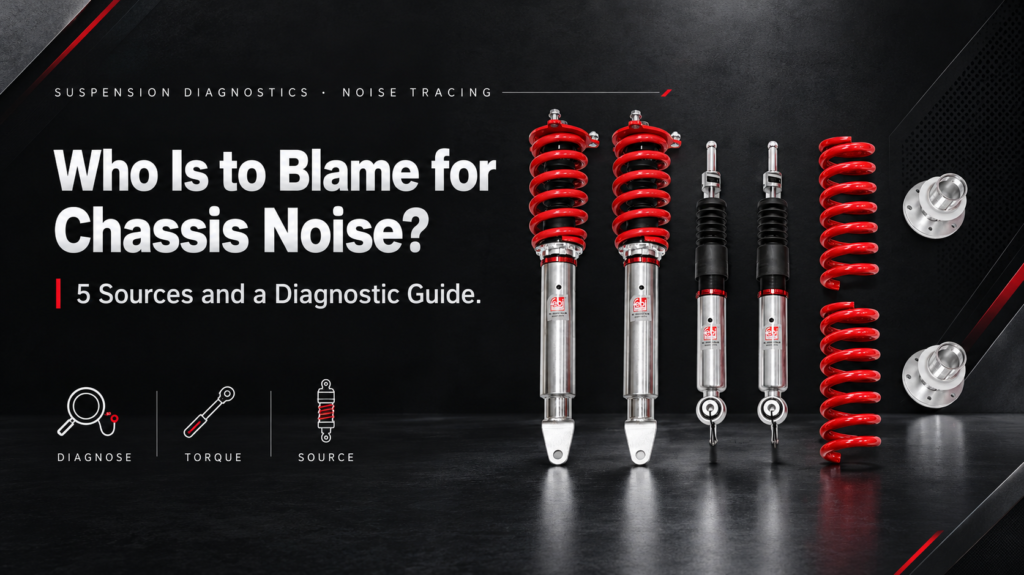
Shock Absorber Beginner’s Guide: Working Principles, Types, and Modification Choices in One Article
- All Content, Shock Absorber
Introduction: What Exactly Is a Shock Absorber “Absorbing”?
Many people think a shock absorber’s job is to “absorb road impacts,” but strictly speaking, the spring absorbs the impact, while the shock absorber controls the spring’s rebound and compression motion. Without shock absorbers, after a vehicle hits a pothole, the springs would continue bouncing up and down, the tires would struggle to stay planted, braking distances would increase, and both handling and safety would degrade significantly.
A shock absorber is essentially a damping device that converts mechanical vibration energy into heat. By limiting the speed of suspension movement, it helps the wheels settle quickly after disturbances while maintaining tire contact with the road.
Chapter 1: Working Principle
How Does Hydraulic Fluid “Eat” Vibration?
1.1 Basic Structure
The most common hydraulic shock absorber contains: a cylinder tube, a piston, a piston rod, a valve shim stack, hydraulic fluid, and a reservoir. The piston is fixed to the end of the rod and moves up and down inside the cylinder. The piston has fluid passages controlled by valve shims.
1.2 Compression and Rebound
When a wheel rolls over a bump, the suspension compresses, the piston moves inside the cylinder, and fluid is forced through the piston’s shim passages. The narrow passages restrict fluid flow and generate compression damping to resist rapid compression. After the wheel passes the bump, the spring pushes the suspension into rebound, the piston moves in the opposite direction, and fluid flows back, generating rebound damping to prevent the spring from launching the body upward.
1.3 Why Does Heat Build Up?
When fluid is forced through narrow passages, throttling resistance occurs, and mechanical energy is converted into heat. The harder the shock absorber works, the hotter the fluid becomes. This is why high-performance shock absorbers need to consider heat dissipation and fluid stability.
Chapter 2: Main Types
Monotube, Twin-Tube, and Beyond
2.1 Twin-Tube Shock Absorber
Twin-tube is the most common design. It contains a working cylinder and an outer reservoir tube. Fluid flows between the working cylinder and the inner tube, and the outer tube serves as the reservoir. It is simple, cost-effective, and offers broad comfort tuning flexibility, widely used for OE replacement and daily road use.
2.2 Monotube Shock Absorber
A monotube has a single cylinder, internally divided by the piston into a fluid chamber and a high-pressure gas chamber (usually nitrogen). The gas is separated from the fluid by a floating piston to prevent aeration. Monotube designs dissipate heat better and resist fade more effectively, suitable for high-performance and heavy-duty applications, but require higher manufacturing precision.
2.3 Inverted Design
Traditional shock absorbers have the piston rod on top and the cylinder below. The inverted design places the thicker cylinder on top and the piston rod below. The core advantage of this design is reducing unsprung mass, allowing for more responsive suspension. Additionally, the inverted structure provides stronger bending moment resistance and optimized heat dissipation, significantly improving handling.
2.4 Adjustable Damping & Height
Adjustable damping shock absorbers allow the user to adjust compression damping and rebound damping via knobs. Combined with a threaded body and locking rings, they can also adjust spring seat height (i.e., ride height adjustability), thereby changing the vehicle’s stance and center of gravity. This provides great flexibility for different road conditions, loads, or driving styles.
Chapter 3: Modification Choices
3.1 Define the Use Case First
Before modifying shock absorbers, answer three questions: What is the primary use? What are the vehicle load and road conditions? Is the vehicle often fully loaded or towing? Daily commuting, long-distance highway driving, mountain roads, track use, and off-road heavy-duty applications have completely different damping and heat dissipation requirements.
3.2 Damping Match Matters More Than “Stiffness”
Many people equate “shock absorber modification” with “installing harder dampers,” which is a common misconception. Too much damping prevents the tires from following the road promptly and reduces comfort; too little damping leads to excessive body motion, brake dive, and body roll. The correct approach is to match damping to spring rate, vehicle weight, tires, and intended use.
3.3 Seals and Material Details
Shock absorbers work in extreme weather over the long term. Inferior oil seals easily age and leak, causing damping failure. Excellent shock absorbers require oil seals with special design processes, offering low and ultra-high temperature resistance. Additionally, combined with stable formulations of high-quality damping oil, they can adapt to ultra-low and high temperatures. As the cylinder body is exposed to mud and sand over time, adopting nano-level coating technology effectively prevents corrosion and rust.
3.4 Abnormal Noise and Support
Abnormal noise after modification often comes from the top mount connection. Using a reinforced rubber alloy top mount can effectively eliminate abnormal noise and improve durability. Meanwhile, shock absorbers must match the springs. Using reinforced springs customized with high-stress materials for specific cars ensures better support while maintaining comfort.
Chapter 4: Quick Selection
Match to Need

Shock Absorbers Are Not “The More Expensive, the Better,” But “The Better Matched, the Better”
The core task of a shock absorber is to control spring motion, keep the tires planted, and convert vibration into heat. Understanding the working principle and focusing on materials and structural details (such as inverted design, high-quality seals, anti-corrosion coatings, and damping adjustment) will help you choose the shock absorber that truly fits your driving scenarios.
Choose Our Shock Absorbers
Combining the principles above, our products are designed exactly for this. Whether you want to push your vehicle’s handling limits or seek a more comfortable street ride, we provide tailored chassis upgrade solutions:

Submit your vehicle model and driving needs | Get exclusive modification advice and quotes
- Fully Adjustable: Adjustable ride height and damping stiffness, perfectly balancing personalized stance and street comfort.
- Extreme Temperature Stability: Imported oil seals with special designs, combined with German-imported damping oil, maintain stable performance in extreme cold and heat.
- Anti-Corrosion & Heat Dissipation: Nano-level zinc-nickel coating prevents rust; the FC series features a one-piece aviation aluminum body for efficient heat dissipation.
- Custom Fit: Reinforced rubber alloy top mounts and high-stress custom springs effectively eliminate abnormal noise and provide stronger support.
We deliver not just shock absorbers, but a chassis upgrade solution of “handling, comfort, and durability.”
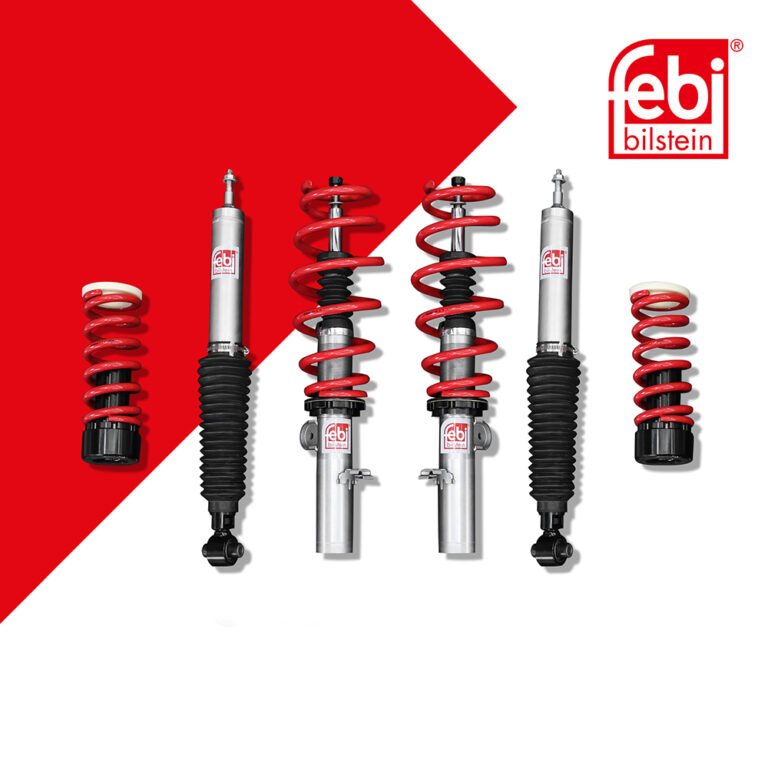
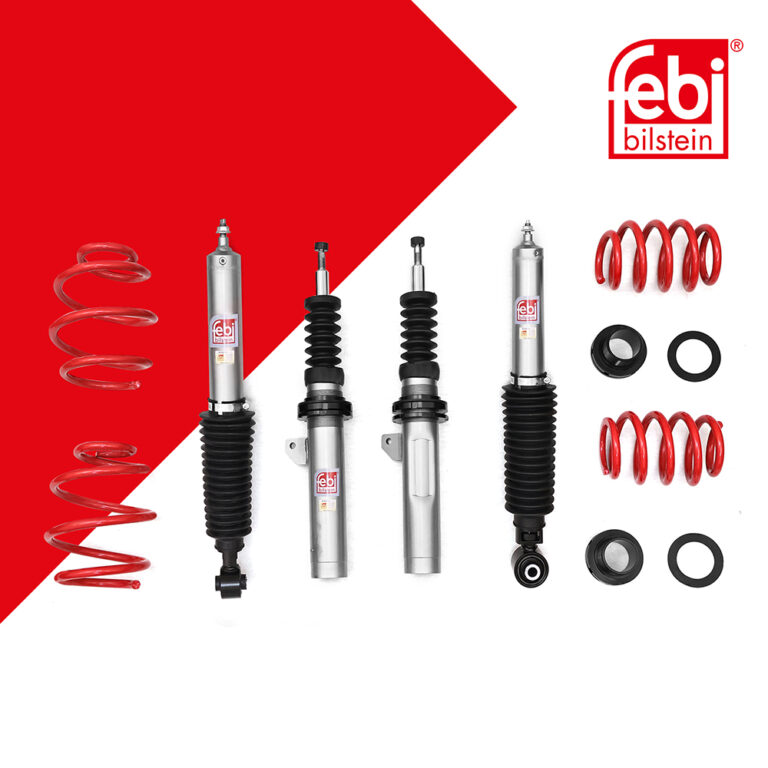
Febi Bilstein Coilover Suspension Kit Height Adjustable Shock Absorbers for MINI F56
$1,500.00
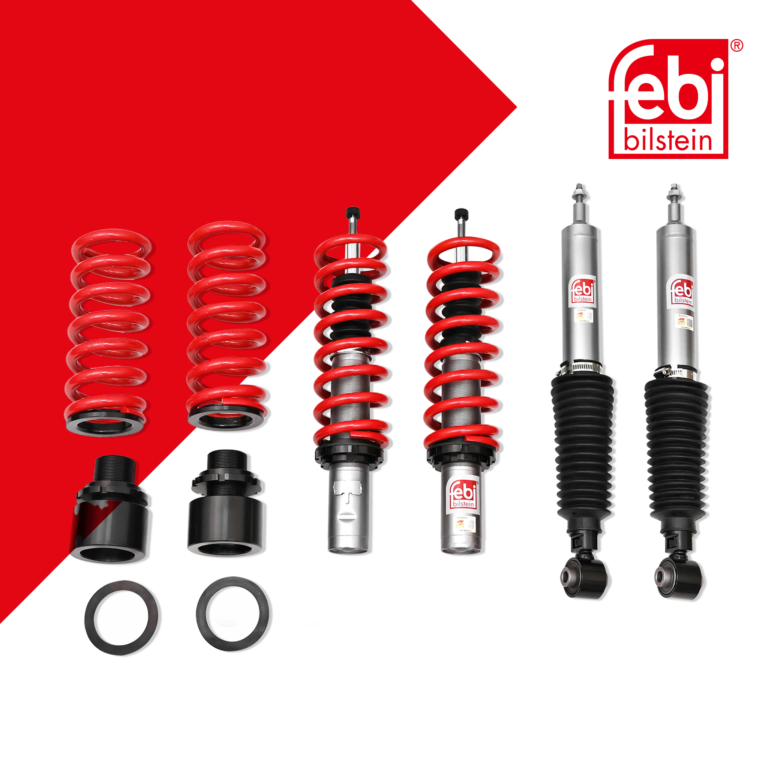
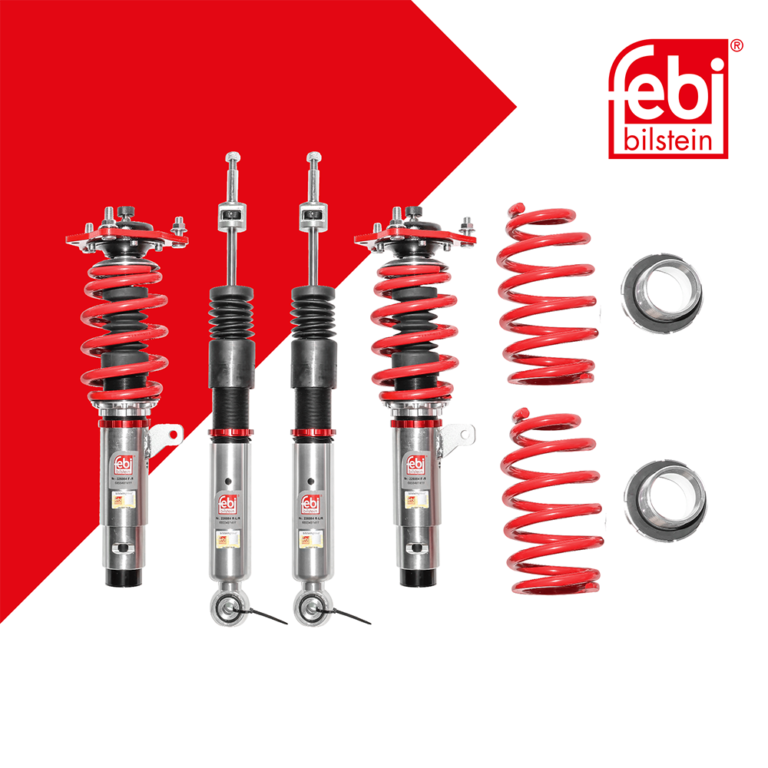
Febi Bilstein Adjustable Coilover Shock Absorber Kit for Honda Civic 11th Gen FE 1.5T
$1,181.00
